

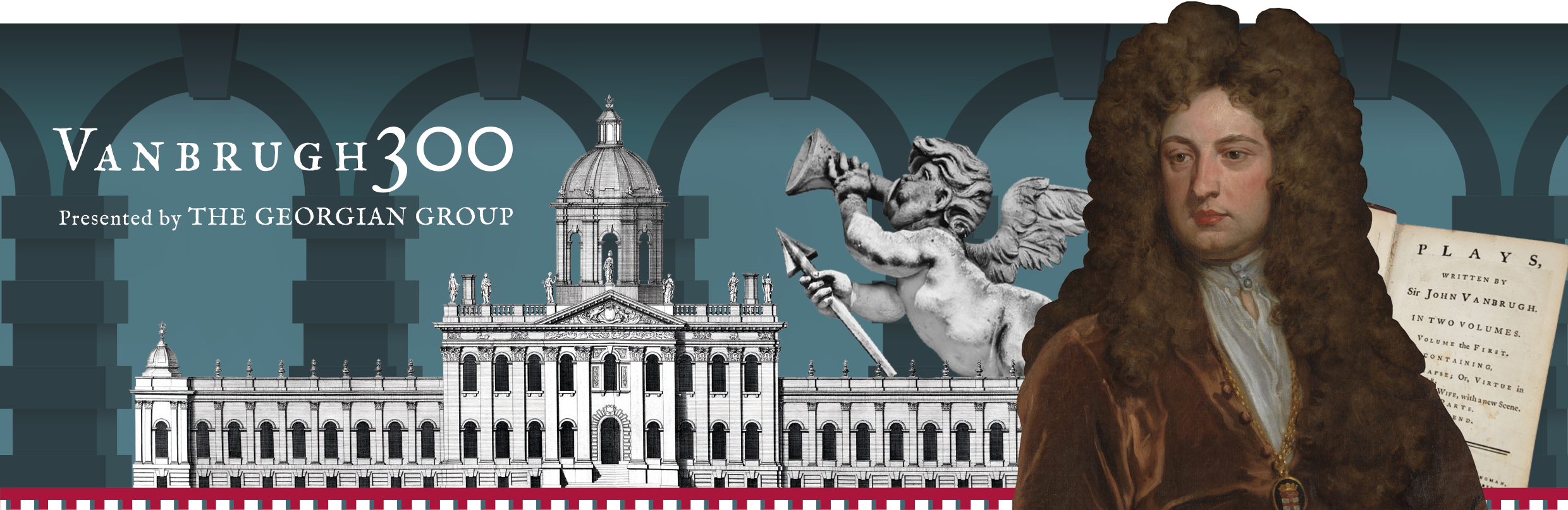
Join us in celebrating The Rockstar of English Baroque, Sir John Vanbrugh
This year, we are proud to be part of VANBRUGH300, a nationwide celebration marking the tercentenary of Sir John Vanbrugh; an extremely important figure in Grimsthorpe’s history. Many of our visitors will be familiar with the majestic Vanbrugh Hall, the first and most impressive room of the Castle visitor route. However, this year we are excited to reintroduce Vanbrugh as one of the most original and influential figures of his age.
With talks, workshops, family activities and a brand new, personalised exhibition, we will explore how his extraordinary experiences as an architect, playwright, soldier, diplomat and spy, shaped a legacy that continues to resonate today, highlighting his influence as a man whose imagination helped redefine Britain’s architectural landscape. We will also be welcoming local schools in a Vanbrugh Schools Week, in which Vanbrugh’s story will provide material to support the national curriculum learning in schools and initiate exploration with local communities.
What’s On?
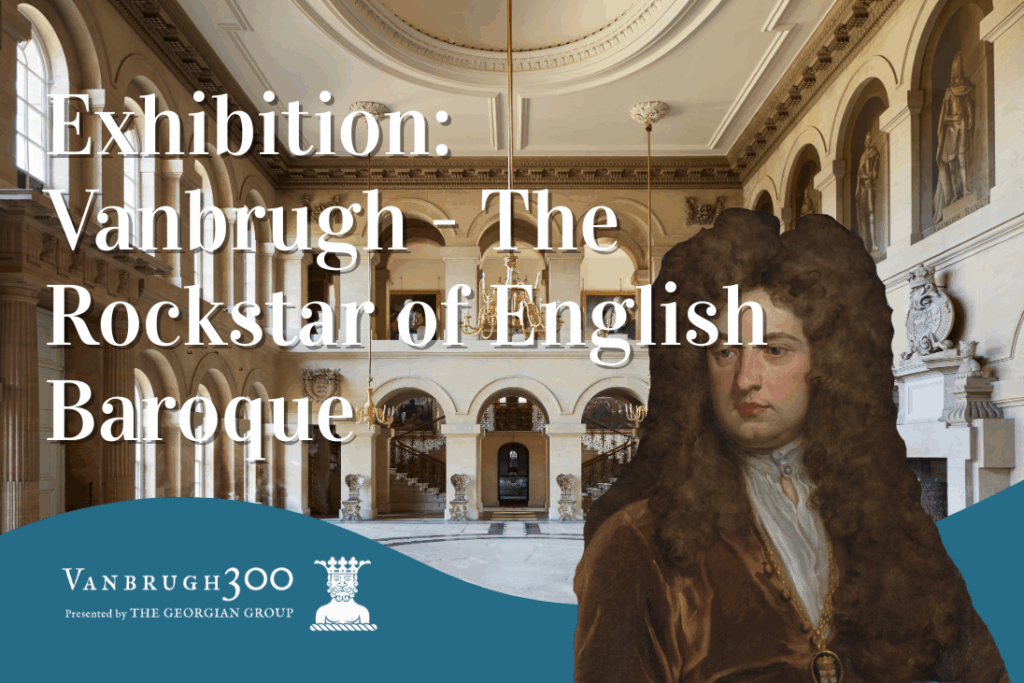
Exhibition: Vanbrugh – Rockstar of the English Baroque
30 April – 30 September | Public Open Days
This year, we have a brand new exhibition celebrating the life and works of Sir John Vanbrugh, with a particular focus on his influence on and relationship with Grimsthorpe Castle. Visit on any of our Public Open Days to learn about this legend of English architecture in what is referred to as ‘his finest room’.
Grimsthorpe has its unique part of the exhibition. Each display is illustrated with newly commissioned photographs of the house, original plans and contemporary paintings and portraits.
Entry to the exhibition is included with a Castle, Park and Gardens Day Ticket, or a Seasonal Ticket (Historic Houses, Season Tickets)
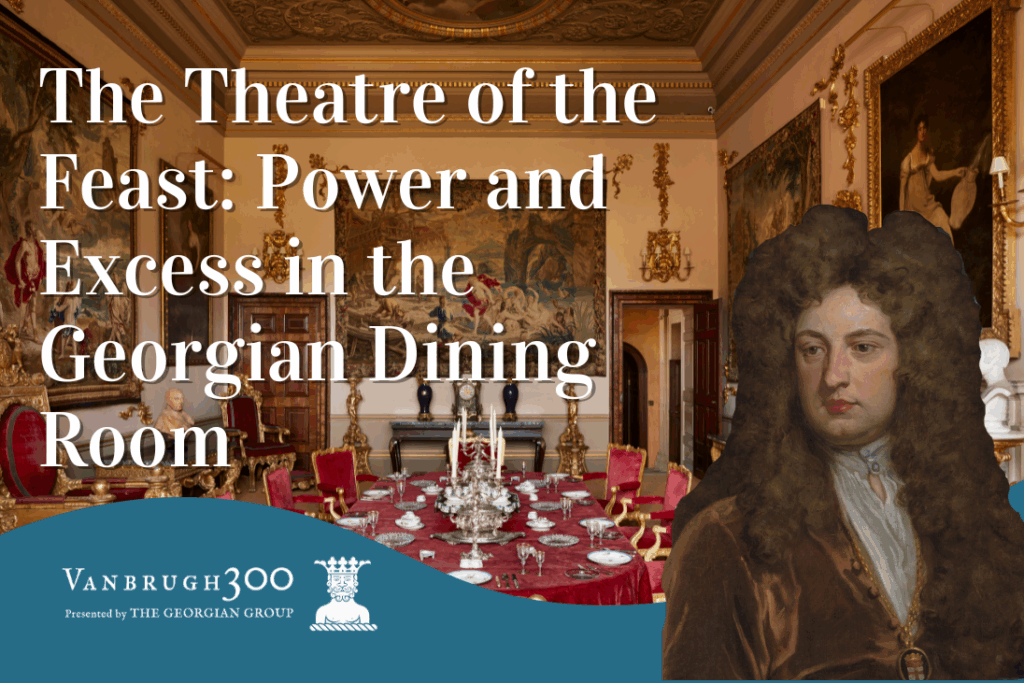
The Theatre of the Feast: Power and Excess in the Georgian Dining Room
Thursday 11th June | 2:30pm
Step back into the 1700s and into the most important room in Britain: the country house dining room. In this engaging talk, Dr. Amy Boyington pulls back the velvet curtains on the ‘theatre of the feast’ to reveal how the Georgian elite used architecture, art, and an almost religious devotion to excess to cement their social standing.
Explore the high-stakes political dining of the Kit-Cat Club, where Sir John Vanbrugh’s ‘Castle Style’ architecture provided a literal fortress for Whig power and legendary toasts. From the Gothic drama of Lord Byron’s wine-filled human skulls and the scandalous glitter of silver bought with bribes, to the visceral reality of Parson Woodforde’s ‘maggoty ham’ and drunken pigs, Amy explores the dining room as a pivotal engine room of society. Discover the rigid choreography of Service à la Française, the ‘Frenchified’ culinary rivalries of the Napoleonic wars, and the legendary after-dinner rituals where port was poured and political alliances were forged. Join us as we peel back the gilding to reveal a world of impossible tensions- where the line between supreme refinement and raw, gluttonous reality was as thin as a silver-handled blade.
In Conversation : Sir Charles Saumarez Smith CBE and Jeremy Musson
Friday 19th June| 6:30pm
We will be welcoming Sir Charles Saumarez Smith CBE and Jeremy Musson to Grimsthorpe this summer as part of VANBRUGH 300.
Sir Charles Saumarez Smith CBE was Secretary and Chief Executive of the Royal Academy of Arts until 2018, Director of the National Gallery (2002 – 2007) and also of the the National Portrait Gallery (2002 – 2007). Since then, he has published The Art Museum in Modern Times (Thames and Hudson, 2021) and, more recently, John Vanbrugh and the Drama of Architecture (Lund Humphries, 2025). He is a trustee of the Garden Museum and writes a monthly column on architecture for The Critic.
Jeremy Musson is an architectural historian with a special interest in the English country house. He is author of several books, including The Country Houses of Sir John Vanbrugh (2008). He teaches at the University of Cambridge and New York University in London, and is also heritage consultant. Architectural editor at Country Life magazine from 1998 to 2007, he was also presenter and co-writer of the BBC2 TV series The Curious House Guest about the history and lives of historic country houses.
Don’t miss the chance to be a part of this conversational insight into all things Vanbrugh, with refreshments on offer throughout the evening. Visitors will also have the chance to take a stroll around the formal gardens before and after the conversation.
Timings: Entry from 6:00pm | Start time 6:30pm | Event End approximately 8:30pm
Ticket Prices: Adults £10 | Children/Students £5
Location: Grimsthorpe Castle | Please park at the Riding School. More information will be available upon booking.
Family Open Weekend
Saturday 20 June & Sunday 21 June
Get ready for a weekend packed with creativity, imagination, and activities for all. Settle in for a lively storytelling performance, roll up your sleeves to make your own John Vanbrugh‑inspired wearable architecture, or explore the hidden stories in his buildings through movement and play in a fun, family‑friendly drama session.
All activities and workshops are included in your entry ticket to the Castle, Park and Gardens.
Please note: Season Ticket and Historic Houses card holders are permitted entry on these days.
Opening Hours: 10:00am – 5:00pm (last entry 4:00pm)
Prices: Adult £18 | Child £9 | Family £48 | Blue Light Card £16
Storytelling | Saturday | 10:30, 11:30, 13:30 and 14:30
This fast-paced, interactive 20-minute family storytelling performance hurtles through the many hats of one of Britain’s most surprising figures. Storytelling will take place at various times throughout the day. Perfect for families and curious minds of all ages.
Hats Off to Vanbrugh! Family Design Session | Saturday & Sunday | 10:00 – 12:00, 13:00 – 15:00
Become both architect and costume designer in this fun, hands-on session inspired by the life and work of Sir John Vanbrugh. Drop in at any time and design your very own wearable work of architecture inspired by the design of Grimsthorpe Castle. Think like an architect as you build a three-dimensional design that can be worn, displayed, and taken home
Big, Bold & Baroque: A Vanbrugh Architecture Adventure | Saturday & Sunday | 11:00 – 11:50, 13:15 – 14:05, 14:30 – 15:20
In this lively, hands-on family workshop, you’ll explore the extraordinary life and buildings of Sir John Vanbrugh through movement, imagination, and play. Vanbrugh believed imagination could build anything – stories, buildings and ideas. In this workshop, families will discover that they can too.
An Evening of Vanbrugh : Production by the Cambridge University Amateur Dramatic Club
Saturday 20 June | 6pm
We are delighted to welcome England’s oldest student theatre company, the Cambridge University Amateur Dramatic Club, to celebrate the 300 year anniversary of playwright and architect Sir John Vanbrugh with a medley of his greatest scenes.
This evening of laughter and love will be performed at Grimsthorpe Castle, designed by Vanbrugh himself as his last masterpiece. Student actors, directors and designers from Cambridge will travel to the castle to perform highlights from across Vanbrugh’s work, alongside newly-written responses commissioned especially for this performance.
With Vanbrugh’s witty Restoration comedies, the gorgeous setting of his Great Hall, and the talent of CUADC artists, this is one evening that you cannot miss. Refreshments will be on offer throughout the evening, and visitors will also have the chance to take a stroll around the formal gardens before and after the production.
Timings: Entry from 5:30pm | Start time: 6:00pm | Event End 8:30pm
Ticket Prices: Adults £10 | Children/Students £5
Location: Grimsthorpe Castle | Please park at the main visitor Car Park. More Information will be available upon booking.
Celebrating Vanbrugh Across the UK
VANBRUGH300 is a nationwide celebration, presented by The Georgian Group following a six – figure grant from The National Lottery Heritage Fund.
Grimsthorpe will be joined by five other of Vanbrugh’s most significant buildings in providing a variety of events, educational programmes, volunteer training, lectures and exhibitions this year. The VANBRUGH300 partners include: Castle Howard (Yorkshire), Blenheim Palace (Oxfordshire), Seaton Deleval (Northumberland), Kimbolton Castle (Cambridgeshire) and Stowe House (Buckinghamshire).
A Fragment of History : Vanbrugh at Grimsthorpe
Vanbrugh and Robert Bertie, sixteenth Lord Willoughby de Eresby, were friends for many years, travelling together in France in 1683 and to the Hague in 1688. It is possible that Vanbrugh designed buildings for Bertie in the nearby village of Swinstead in the early 1700s, as a summer house there looks very much like Vanbrugh’s Belvedere Tower, a feature of Claremont Landscape Garden in Surrey.
In 1715 when Bertie became Duke of Ancaster he invited Vanbrugh to remodel Grimsthorpe. Vanbrugh demolished the classical façade built after King Charles II reclaimed the throne in 1660, replacing it with the boldly dramatic front we see today. The central portion, an arcade of arched windows on two levels set around a pedimented entrance door, is punctured by two pairs of banded Tuscan columns, and topped by the Ancaster crest and figures from classical mythology. At the outer edges, monumental three-storey towers reach forward giving the whole a grandeur of scale. You see it as you approach from a distance across the Lincolnshire wolds, majestic and unchanged.